| BIGJ'S HOMEPAGE
RAP PICTURES
RAP LINKS
SIGN THA GUESTBOOK
RAP NEWS
MESSAGE BOARD
Custom3 Page
|
|
|
RAP NEWS
EMINEM
|
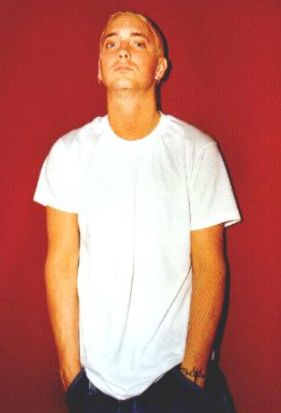 Eminem Pleads Guilty To Felony
by Kweli Wright
Thursday, Feb. 15
Eminem's hands were shaking in court yesterday as he pled guilty to one felony count of carrying a concealed weapon in Macomb County Circuit Court in Mount Clemens, Mich.
In exchange, prosecutors agreed to dismiss the assault with a dangerous weapon charge. “Well, your honor, on June 4, 2000, in the city of Warren, I was in possession of a firearm in a motor vehicle,” Eminem told Judge Antonio P. Viviano.
The 28-year-old rap star was charged with the two counts after he allegedly pistol-whipped a man, John Guerra, whom he claims to have seen kissing his wife, Kim Mathers, outside of Warren's Hot Rock nightclub last June.
The charge of carrying a concealed weapon is the more serious of the two, carrying a possible five years in prison. The assault charge is a four-year felony.
Eminem attorney Brian Legghio explained that his client pled guilty to the more serious charge because if the case went to trial, Guerra would be called to testify. The Grammy nominee would then face the possibility that he could be found guilty.
Sentencing is set for 1:30 p.m. April 10. But if Eminem and his attorneys do not accept the sentence given by Viviano, they can withdraw his plea and the case will then go to trial. In the meantime, Viviano told Eminem that probation officers must be able to contact the rapper at any time.
|
|
BIZZY BONE
Thursday, December 21, 2000
Bizzy Bone of rap group Bone Thugs-N-Harmony has filed a breach-of-contract lawsuit against Loud Records and Ruthless Records in connection with the recording of his second solo album.
In the suit, filed Dec. 19 in U.S. District Court for the Central District of California, the rapper (real name: Bryon McCane) alleges that when it came time to record his second solo album for the label, Loud failed to provide him with an advance or pay the recording costs of the album, thereby breaching a 1997 agreement between the rapper and Loud.
In addition, the suit claims that when Bizzy Bone -- who paid for the recording himself -- delivered the album circa June 2000, the label "failed to accept the tender" of the album and breached his contract once again by not giving the rapper the $1,000,000 advance due him upon delivery.
The rapper claims Loud breached a 1997 recording agreement.
Additionally, the rapper claims that Sony Music Entertainment and Epic Music Video, which are also named in the suit, along with Ruthless Records, manufactured and distributed the video "The Collection: Volume Two" without Bizzy Bone's consent. According to the suit, the video "portrays Bizzy untruthfully as a user and endorser of illegal drugs."
The suit, which also alleges unfair competition, unjust enrichment and conspiracy, seeks damages, a permanent injunction barring the sale of the video, a recall of all copies of the video in the marketplace and profits derived from the video.
The defendants could not be reached for comment.
|
|
JUVENILE
Don't let the name fool you. Cash Money Records' latest superstar Juvenile, is a hot rapper with more than ten years experience of ripping shows, dropping cold-as-ice lyrics and laying it down for "Uptown" New Orleans. "Juvenile is a name I got when I was young and thugging," explains 23-year-old Terius Gray. Juvenile hails from the infamous New Orleans Uptown region and was reared in the Magnolia projects. Like some other housing projects, the Magnolia projects have a serious reputation for being rowdy and wild. It's a place where few children survive unscathed by the horrendous poverty that grips many of the residents there. But not Juve. Like the elders of old, he kept his eyes on the prize - his dream of being a rap star. "I had my struggles," says a solemn Juvenile when asked about life in the "wild" Magnolia. "My pops went AWOL on me when I was four, so I had my struggles and I had peer pressure, but I didn't let things get to me. I always stayed focused on what I was trying to do." Rapping since the age of ten, Juvenile formed a group called the UTP, a name that he has tattooed on his stomach in honor of his old Uptown crew, many of whom are either dead or locked up. "UTP was like a coalition for Uptown rappers." Through his rap activity, Juvenile became instrumental in helping shape New Orleans' hip hop scene. However, by the mid-90's, Juvenile's career took a turn for the worst. Resisting the lure of fast money and cars, he took on a series of odd jobs in between writing and doing shows whenever he could. His luck changed when he met Ronald "Suga Slim" Williams and his brother Brian "Baby" Williams, owners of Cash Money Records. On the way to work, he auditioned for them on the spot. Although the brothers liked what they heard, they didn't have a spot on their roster for new artists. They gave him a card and told him to check with them later. Juvenile showed up the next day, and the day after, and the day after, and the day after that. In fact, he started hanging around the studio so much that the label finally gave him a shot and released Juvenile's debut album titled Solja Rag. Instantly, Solja Rag became an underground smash, selling close to 200,000 copies in the Southern region alone. It also helped to set the stage for Juvenile's new group, The Hot Boys, whose debut LP Get It How You Live sold nearly 400,000 copies and landed in the #25 spot on the Billboard charts. Now, Juvenile returns with his sophomore solo CD 400 Degreez, which will definitely prove to be Cash Money's hottest release yet. Just listen to the sizzling lead single "HA," with its rapid-fire rhythm, spacey keyboard and Juvenile's endless aggression on the mic. Everyone is sure to get caught up in the high energy of "Welcome To Magnolia" with it's bouncing organ chords and tight rhythms built around a 70's rim shot, or the spine-chilling tracks "My Nine Is Gonna Die With Me" and "Back Dat Azz Up." On "Run For It," you can feel the hunger in Juvenile's voice and the heat coming from producer Mannie Fresh's tracks. Why 400 Degreez? Let Juvenile explain. "The area I come from, they call it the 'hot block; when the police come, they draw heat.' And I'm a hot boy so that 400 Degreez was perfect because that is the boiling point." Besides, given the amount of bubbling bass lines, steamy rhythms and scorching lyrical content that this CD packs, the album couldn't be called anything else.
Add your link here
.
Add your link here
|
 MASTER P
BIOGRAPHY: MASTER P.
MASTER P
BIOGRAPHY: MASTER P.
Master P.
Rap |
Label: No Limit Records
HE is one of the most successful rappers in the history of the genre, yet most people have probably never even heard his name. His first three records sold a combined 1.5 million copies before any mainstream music publication knew who he was. He's already made one movie that, after being rejected by distributors, went on to sell hundreds of thousands of copies on video and continues to be a consistent rental since its summer of 1997 release. And, with his No Limit Records label, he's created one of the most profitable franchises in rap music — without the benefit of any radio or video airplay. His name is Master P, and he's firmly established himself as one of the most shrewd businessmen the music industry has ever seen.
Born Percy Miller in New Orleans, Louisiana, Master P was the eldest of his parents' five children. He grew up in the Calliope Apartments (now called the B.W. Cooper Apartments), a housing project infamous for being one of the city's most violent places to live. "Calliope was one of the worst neighborhoods you could even think about," P told Vibe magazine last year. "[When] people think of New Orleans, they think of tourism and Mardi Gras and all that. But there's another side. I had to grow up never having nothing, and in life, you gotta be down to survive." P's parents divorced when he was eleven. Four years later, he moved with his mother to Richmond, California, a city just north of Oakland, and he began living part of the time there and part of the time at his grandmother's home in New Orleans. He eventually became a scholarship basketball player, earning a walk-on spot with the University of Houston Cougars.
In 1989, Master P opened the rap-based retail record shop No Limit Records in Richmond, using ,000 he inherited from his grandfather. Within a couple of years, he transformed the modestly successful business into a record label of the same name, releasing his own debut album, The Ghetto Is Trying to Kill Me, in 1991. In running his own retail shop, P learned firsthand what it was kids in the hood desired, and his album was tailored to fit that demand. The Ghetto Is Trying to Kill Me hit, making a huge impression in the Bay Area and in New Orleans, where P had begun to notice a burgeoning underground music scene. He was one of the first people to recognize that the music engendered in the South was very similar to the popular gangsta-rap music coming from the West Coast, and the production on his album highlighted that similarity.
With his success, though, also came trouble. Following the release of the album, a teenager on trial for robbery cited P's "211" as the catalyst for his crime. Though nothing ever came of the implication, it definitely put P in the glaring spotlight of the authorities. That song, like much of his material, exemplifies and glorifies the hard life of the streets. Tales of killing, robbery, and violent and sexual crimes are commonplace in P's music. Also commonplace is an acknowledgment of hip-hop as the "new hustle" for drug dealers. Though P himself refuses to admit that he was a drug dealer, the lifestyle is certainly implied in his lyrical content. As he told Vibe, "I was always a hustler. I did whatever I could to make ends meet."
One of Master P's greatest strengths has been his ability to parlay his success into rewards for his friends and family members. Sharing the bounty has not only provided him with the comfort of knowing that those close to him are afforded the opportunity to achieve something in life, but it also has had the attendant affect of supplying him with a steady stream of talent for his label. The No Limit roster includes several of his relatives: cousin Mo B. Dick is one of the key providers of backing soundtracks for all of P's releases; and rappers Silkk the Shocker and C-Murder are P's younger brothers. Soon after The Ghetto Is Trying to Kill Me hit the shelves, P masterminded the West Coast Bad Boyz, a collective of up-and-coming rappers from the Bay Area that also featured two other model rapper-entrepreneurs, E-40 and Rappin' 4-Tay.
No Limit Records inked a distribution deal with Priority Records — home to Ice Cube and former home to NWA — that guaranteed worldwide availability of its albums. Since 1996, the label has released a number of records from various artists: Silkk the Shocker (who also appeared on the Scream 2 soundtrack); Mia X; Skull Drugrey; C-Murder; and TRU, a group that consists of P, Silkk, and C-Murder. All made it onto the Billboard charts with very little, if any, radio airplay — an amazing feat considering most of No Limit's sales come from mom-and-pop stores that don't record SoundScan sales figures, which represent the data upon which Billboard comprises its charts.
Last year, Master P launched a companion career as a movie mogul with the release of I'm 'Bout It, 'Bout It, a semi-autobiographical film titled after a song from TRU's second album, Tru 2 Da Game. The movie, which was made on a shoestring budget with intentionally poor camera quality, was initially rejected by several distributors. Knowing that the film would find an avid following based on his album sales, P released the movie himself, direct to video. I'm 'Bout It, 'Bout It was a smash and it continues to be a hot rental property; it even found a home on the shelves of the usually conservative Blockbuster Home Video chain stores.
As bountiful as the year 1997 was for P, it brought its share of difficulties. A September concert in Atlanta ended in a riot before he could even take the stage. Reports say that the trouble started when the venue, the Doraville International Ballroom, swelled dangerously to twice its capacity. When non-paying customers bum-rushed the door, police responded by hitting people and showering others with pepper spray. The show was ordered to be shut down, and after the emcee indicated to the crowd that the event would have to be rescheduled, a fight broke out that resulted in shots being fired and even more chaos. In another matter, Master P was sued by the writers of the O'Jay's track "Brandy," who alleged that he had copied the verse and chorus of the song for his hit "I Miss My Homies." The case was eventually settled out of court.
But through all the contretemps, P persevered. He wrote and directed another movie, a comedy about cellular-phone scams called I Got the Hook Up, and this time he had no trouble at all finding a distributor for it. The film, which was picked up by Dimension Films, the division of Miramax responsible for the Scream films, was slotted for a May of 1998 release. The soundtrack to the album features D'Angelo, Ice Cube, Jay Z, and other acts from the No Limit roster. "I wanna be the first ghetto filmmaker in America," Master P told MTV News recently. "All ghetto movies. I'm specializing in movies nobody else wants to make. We're going to constantly just crank out movies the way I did tapes and CDs." In keeping with that line of thought, Master P has already commenced work on his third movie, tentatively titled Blue Light; he will head up a cast that also includes Treach from the hip-hop group Naughty by Nature and comedian Eddie Griffin.
Master P's story is remarkable. He transformed a fledgling label with no distribution and a roster of unknown, unproven artists into a multifaceted entertainment conglomerate, an accomplishment that is even more amazing considering that his Bay Area/New Orleans bases of operations run counter to the typical thinking underpinning the successful New York and Los Angeles markets. Late in 1997, Master P announced that he would release one more solo album before turning his full concentration on running the label; The Last Don came out on June 2, 1998. P scored a major coup in March of 1998, when Snoop Doggy Dogg left Death Row Records to join No Limit; P executive produced Snoop's album, Da Game Is to Be Sold Not Be Told, which hit stores on August 4, 1998. The defection was major news in the hip-hop world — a final, symbolic sign that No Limit Records has supplanted Death Row as the gangsta rap powerhouse
|
LIL WAYNE
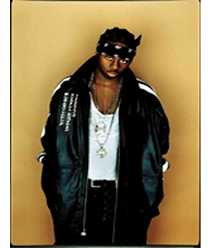
As a member of the platinum supergroup the Hot Boys, Lil Wayne has already made his mark as one of the world's youngest top talents. No one can match his quick wit, lyrical dexterity or down-home Southern charm. He is one of the few hardcore reality-rappers that can write rhymes without profanity. When he blesses the microphone, Lil Wheezy, as he is affectionately known in New Orleans, drops words so full of game and street wisdom, that he makes a person wonder how a young boy learned so much game. "I look at life like an older person," explains the 16-year old rapper. "I think five or ten years older because of who I've been with all my life." Born and reared in the 17th Ward community of Hollygrove, a place riddled with violence and poverty, Wayne struggled to do right, but increasingly found himself attracted to the lure of street life. It wasn't long before he put school on hold, where he was a good student earning decent grades, to take up hustling fulltime. Fortunately, he stayed out of big-time trouble. While hustling, Wayne listened religiously to local rappers like UNLV and Pimp Daddy -- both of whom were signed to Cash Money Records at one point. But, Wayne did more than just listen to his favorite rappers, he was constantly penning his own rhymes, dreaming that someday he would make it. His day came sooner than expected when a friend introduced him to Cash Money Co-CEOs and founders Bryan 'Baby' Williams and Ronald "Slim" Williams. "Cash Money had a rapper Lil' Slim from Hollygrove," recalls Wayne. ""He used to say 'I'm goin' to tell Baby and Slim about you." One day Lil' Slim had an autograph session and Lil Wayne met them. "Baby told me to rap and I did. He gave me a card with his numbers, I started blowing up his pager and calling his office everyday until Baby saw that I really wanted to be down and he put me on." Lil Wayne made his first appearance as a member of the short-lived group The B.G.'z, featuring another young talent named Lil' Doogie, now known as B.G., and later appeared on B.G.'s underground album, True Story in 1993. In 1997, Wayne joined forces with Juvenile, B.G. and Young Turk to form the Hot Boys, and dropped their blazing debut, Get It How U Live, which sold over 400,000 copies in the South and helped Cash Money secure a distribution deal with Universal Records. Lil Wayne made a series of guest appearances on the Big Tymers' How U Love That? Volumes I and II, Juvenile's triple platinum selling 400 Degreez and B.G.'s gold-certified Chopper City In The Ghetto. Currently, the country is reeling from his stellar performance on the Hot Boys' gold-certified sophomore album, Guerrilla Warfare. Now Lil Wayne drops his debut solo project, Tha Block Is Hot - easily one of the best albums of the year. "Basically, I'm giving my fans more of what they want," says Wayne. "My records still goin' to have the Big Tymers, B.G., Juv and Turk on there, but it's goin'to feature me rapping more, so fans can get an idea of what I'm about." Produced by Cash Money's resident beat maestro Mannie Fresh, Tha Block Is Hot rocks some of the hit-making producer's most creative work yet. On the title track, which is the lead single and features B.G. and Juvenile trading lyrical shots with Lil Wheezy; Fresh drops an eerie set of strings over a bubbling syncopated beat and a funky bass vamp that'll have heads bobbing from New Orleans to New York. "High Beaming" is a jazzy track with a strong beat featuring a terse snare, jingling sleigh bells and accented by funky timbales. In addition, the keyboards and jazzy guitar riff provide the perfect soundscape for Wayne and B.G. to flow over. Another stand-out track is the future chart-buster, "'Respect Us," which features a beat inspired by the rich and complex poly-rhythms of saisa combined with a touch of New Orleans' Mardi Gras party music. One of New Orleans' most beloved lyricists has finally stepped to the plate, and judging from the sound of Tha Block Is Hot, he's packing serious heat for the Y2K |
|
|


